Campbeltown
The smallest of the five regions by distillery count, and living proof that a boom built on volume alone doesn't tend to last.
A boomtown that overreached
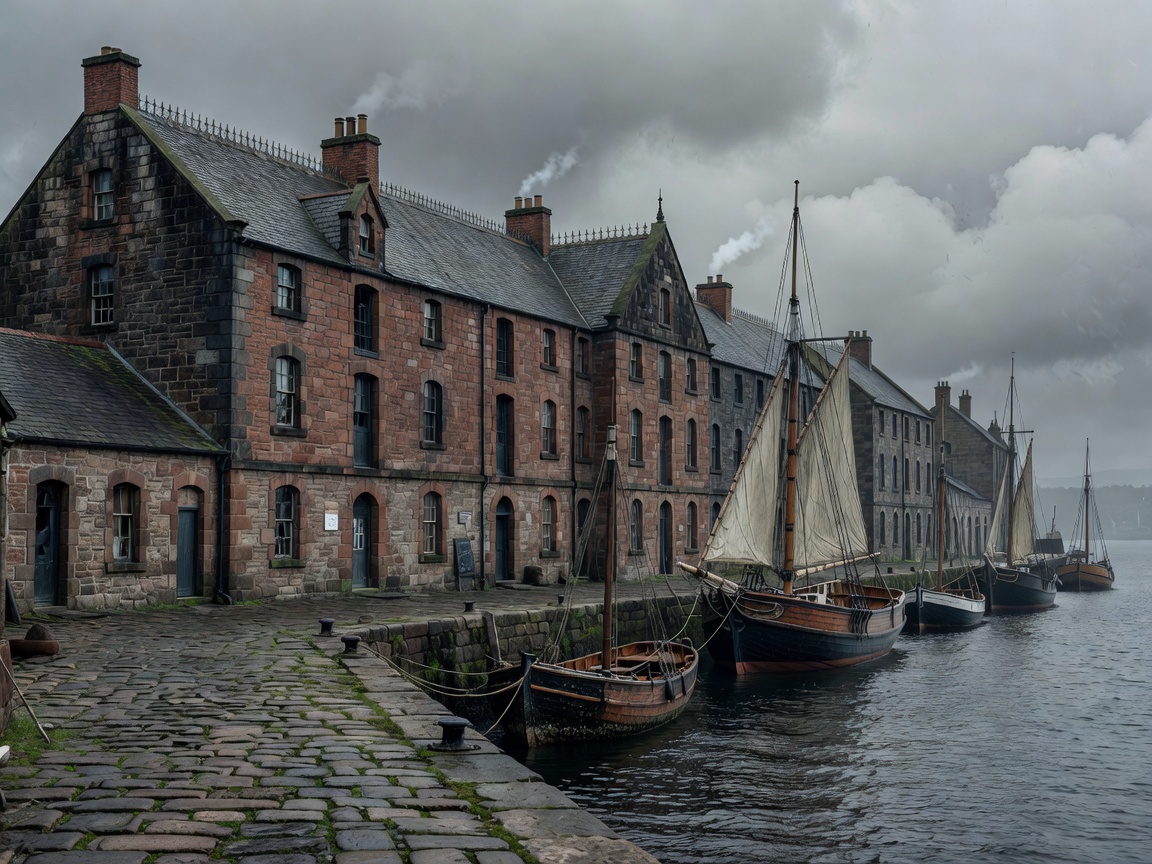
Campbeltown sits at the tip of the Kintyre peninsula, a working harbour town whose whisky industry grew rapidly through the nineteenth century on the back of good rail and sea links, local coal and easy access to barley. By the late nineteenth century, more than thirty distilleries were operating in and around the town, an industrial concentration that outpaced most of the country. That growth wasn't matched by consistent quality control across every producer, and when demand shifted, the town had little cushion to absorb it.
The collapse
The decline that followed had several causes stacked on top of one another: some distilleries had expanded production at the expense of the spirit's reputation, and the loss of key export markets during US Prohibition, which ran from 1920 to 1933, removed a significant outlet just as the Great Depression was squeezing demand at home. Most of Campbeltown's distilleries closed within a few decades of that peak, and the town went from whisky capital to cautionary tale within a single working lifetime.
What's left standing
Today just three distilleries remain in operation: Springbank, Glen Scotia and Glengyle, the last of which produces the Kilkerran single malt. Springbank is notable for continuing to floor malt a portion of its own barley on site, a labour-intensive practice that most of the Scotch industry moved away from in favour of buying malt from dedicated commercial maltsters. That the region's smallest surviving distillery still does some of its own malting says something about how differently Campbeltown's producers have chosen to operate compared with the larger regions.
What shapes the character
Campbeltown malt is often described as sitting somewhere between Highland and Islay style — briny and slightly oily, with a smokiness that varies by distillery rather than defining the region uniformly. Its coastal, working-harbour setting is frequently cited alongside Islay's as an influence on maturation character, though as with Islay, the precise contribution of sea air to a warehoused cask is argued over rather than settled fact. What can be said with more confidence is that, with only three distilleries left, there's less room for "Campbeltown style" to mean anything beyond what those three producers individually make.
Reading a Campbeltown label
Because independent bottlers have long sourced casks from working distilleries across Scotland, a Campbeltown-region bottle may be either an official distillery release or an independent bottling, and the two carry different information. A distillery release will usually foreground the distillery name; an independent bottling should state "distilled at" one distillery and "bottled by" another company, a distinction worth checking given how small the region's producer base now is. With only three names in play, it's one of the more straightforward regions to research fully rather than guess at.
Campbeltown's history is less a rise-and-fall story than a lesson in over-expansion, one the region's three remaining distilleries seem to have taken fairly seriously.