Highlands
The largest of the five recognised regions, which is precisely the problem with expecting it to taste like one thing.
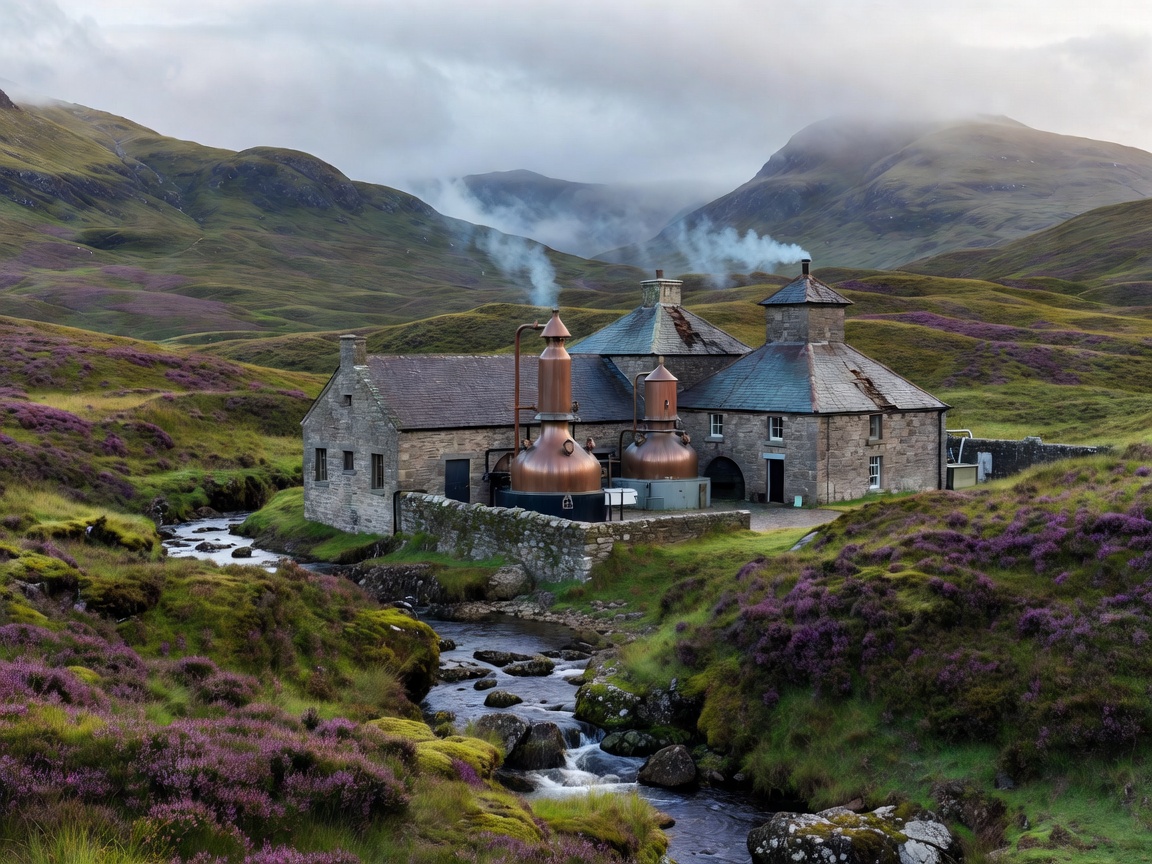
Too big to have one personality
The Highland region, as defined in the Scotch Whisky Regulations 2009, covers the bulk of Scotland north and west of the Highland Line, running from the northern coast down to the edges of the central belt and out to the northern isles. It's by far the largest of the five statutory regions by area, and that size is exactly why it resists a single description. A whisky from Dalmore on the Cromarty Firth and one from Oban on the west coast are both, legally, Highland single malts; there's little else guaranteeing they'll share much beyond that classification.
Sub-regions the rulebook doesn't recognise
People in and around the trade often talk informally about northern, southern, eastern and western Highlands, and about the islands — Orkney, Skye, Mull and others — as though they were separate categories. The Scotch Whisky Regulations 2009 don't actually carve out an "Islands" region; distilleries such as Highland Park and Scapa on Orkney are, for regulatory purposes, part of the Highland region, whatever a label's marketing copy might imply. The informal sub-regions are a useful shorthand for people trying to describe a pattern, not a legal boundary.
What shapes the spirit here
Because the region spans such varied terrain — coastal, inland, low-lying and mountainous — house styles vary enormously with location and cask policy rather than region alone. Oban's location on a small coastal town gives it limited room to expand, and its style leans toward a gentle, slightly maritime character. Glenmorangie, based at Tain on the Dornoch Firth, is known for using some of the tallest pot stills in Scotch production, which favours a lighter, more delicate new-make spirit. Old Pulteney, distilling at Wick near Scotland's northeast tip, has built a reputation around a brinier, more robust style associated with its coastal setting.
Maturation and cask policy
Highland distilleries draw on the same broad palette as the rest of the industry — ex-bourbon American oak, ex-sherry European oak, and a growing use of wine and port casks for finishing — but with less of a regional consensus than Speyside's sherry tradition or Islay's peat identity. Dalmore has built part of its reputation on extended sherry cask maturation, while other Highland producers favour ex-bourbon-forward profiles closer to what's common in Speyside. The region's size means cask policy tends to be a house decision at each distillery rather than a regional habit.
Reading a Highland label
A "Highland single malt" label guarantees a place of distillation within a very large boundary and nothing about flavour direction. Given the spread from coastal, maritime styles to the aromatic lightness associated with Glenmorangie's tall stills, the distillery name and any stated cask information are far more useful indicators than the region alone. Treat "Highland" on a label as a starting point for further reading, not a conclusion.
If a Highland bottle claims to represent "the Highland style," ask which Highlands it means. There's a good chance it means one glen, one coast, or one very tall still.