Lowlands
Scotland's quiet region, which spent a century keeping the blending houses in business while the Highlands got the postcards.
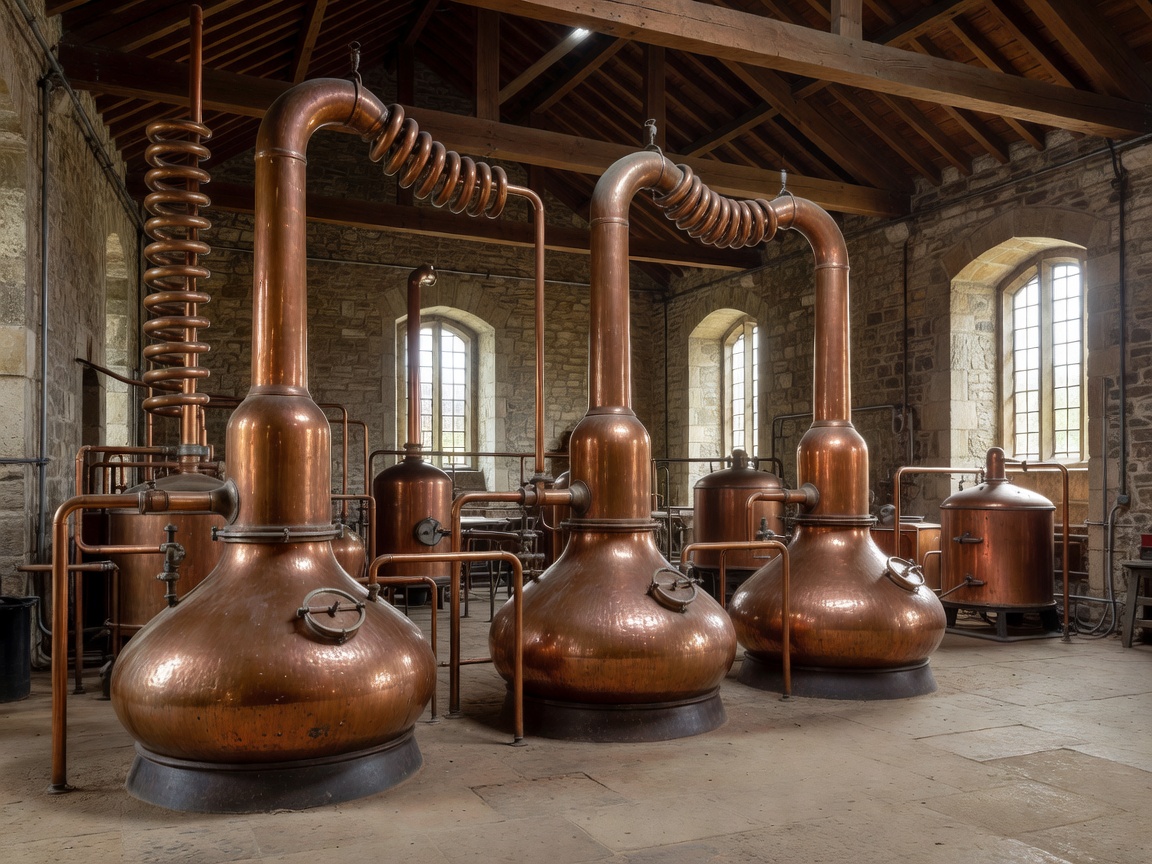
South of the line, lighter in the glass
The Lowland region sits south of the Highland Line, roughly the geological and historical boundary separating Scotland's central belt and southern counties from the Highlands proper. Fewer distilleries survive here than in Speyside or the Highlands, a decline that tracks a broader consolidation of the Scotch industry through the twentieth century, but the ones that remain — Auchentoshan, Glenkinchie and Bladnoch among them — carry a style distinct enough to be worth its own entry rather than a footnote to somewhere bigger.
Built to supply the blend
For much of the nineteenth and twentieth centuries, the Lowlands' role in Scotch whisky was as much about grain distilling for blends as about single malt. Continuous column stills, well suited to producing lighter grain spirit at scale, were adopted early in the Lowlands and fed the blending houses that built Scotch's international reputation. That reputation got an unplanned boost from a disaster elsewhere: the phylloxera root louse devastated French vineyards through the 1870s and 1880s, crippling cognac and wine production and pushing drinkers toward blended Scotch as an alternative spirit. The Lowlands' grain output was a significant part of what filled that gap.
Triple distillation, mostly
Where most Scotch single malt distilleries distil twice, Auchentoshan distils all of its production three times, a practice more commonly associated historically with Irish whiskey than Scotch. The extra pass through the still strips out more heavier compounds, producing a smoother, lighter new-make spirit. Not every Lowland distillery follows this path — Glenkinchie and Bladnoch typically distil twice, in line with the rest of the industry — so triple distillation is a notable regional habit rather than a defining rule.
What shapes the character
Lowland malt whisky is generally associated with a lighter body, and floral or grassy notes rather than smoke or heavy fruit, a reputation that predates any one distillery's marketing and reflects both lower historical peat use in the region and the lighter spirit that triple distillation and column-still grain production both favour. It's a style built for approachability rather than intensity, which made it useful in blends and less prominent as a single malt category for much of the twentieth century.
Maturation and cask policy
Cask policy in the Lowlands follows the same broad options as elsewhere in Scotland — ex-bourbon and ex-sherry oak dominate — but the lighter new-make spirit produced here means the cask's influence often shows through more distinctly, since there's less heavy or smoky character competing with it. A Lowland malt matured largely in ex-bourbon casks tends to read as brighter and more citrus-led than an equivalent Highland or Speyside spirit put through the same cask.
Reading a Lowland label
The Scotch Whisky Regulations 2009 define "single malt Scotch whisky" as whisky distilled at a single distillery from water and malted barley, without other cereals, in pot stills. That's distinct from "blended malt," which mixes single malts from more than one distillery, and from "blended Scotch whisky," which combines malt and grain whisky. On a Lowland label, checking which of these terms applies tells you more about what's in the bottle than the region name alone.
The Lowlands didn't get the dramatic scenery or the peat-smoke folklore. What it got instead was a supporting role in making Scotch a global drink, which is a less romantic legacy but arguably a larger one.